


Category: AI Agent Builder
Pricing: Free • Open Source
Source Type: Open Source
The first open-source autonomous AI agent that plans, executes, and learns independently. The foundation of the modern AI agent movement.
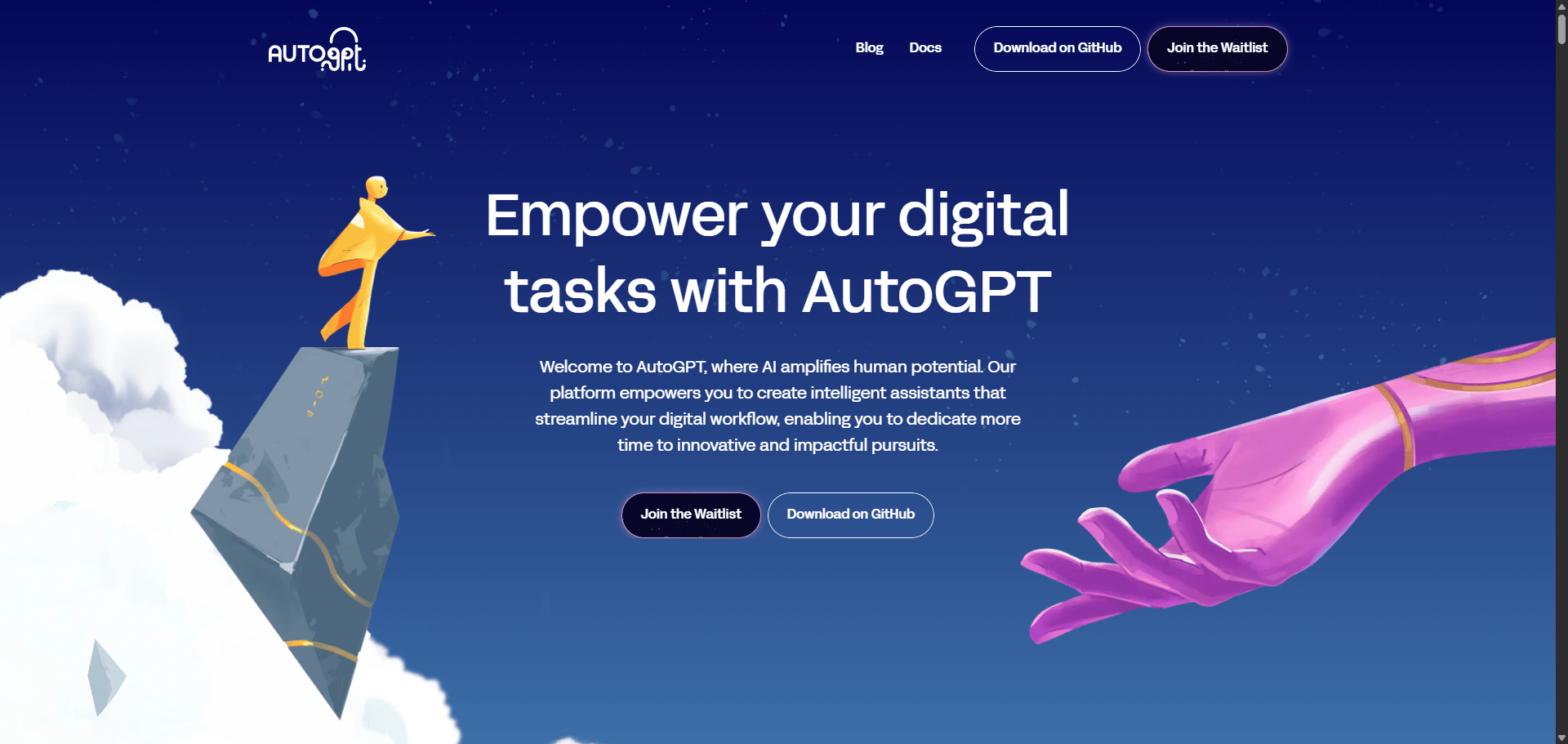
AutoGPT is an open-source experiment and framework that revolutionized the AI landscape by being the first truly autonomous AI agent built on top of large language models (LLMs) like GPT-4.
Created by developer Significant Gravitas, AutoGPT was designed to think, reason, and act independently, chaining multiple prompts together to achieve complex goals — without constant user input.
Unlike traditional chatbots, AutoGPT can plan, research, execute, and self-improve, making it one of the earliest examples of AI agentic behavior.
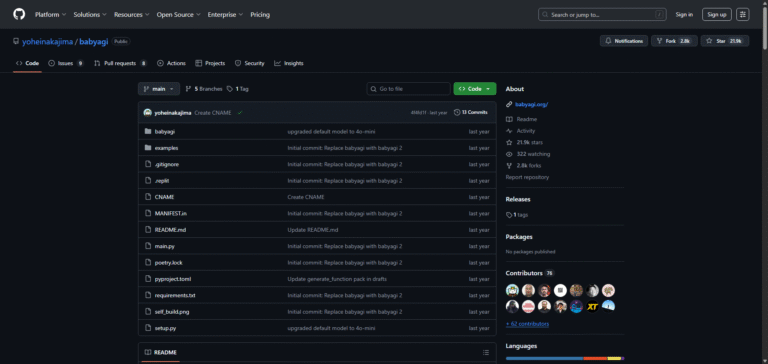
Today, it remains one of the most influential frameworks for developers, spawning projects like BabyAGI, CrewAI, and SuperAGI.
✅ Research Automation — Conducts deep multi-page searches and extracts summarized insights.
✅ Content & Report Generation — Creates blog posts, scripts, and business plans autonomously.
✅ Software Prototyping — Writes and executes Python scripts for code experiments.
✅ Data Analysis & Strategy — Gathers and interprets market data automatically.
✅ Process Automation — Acts as a foundation for creating other AI-powered agents.
✔ True autonomy — minimal user input required once a goal is set.
✔ Open-source flexibility and strong community support.
✔ Pioneered agent orchestration — the framework behind modern multi-agent tools.
✔ Customizable logic and prompt chains.
✔ Compatible with GPT-4, local LLMs, and other models via API.
❌ Requires local setup (Python, API keys, dependencies).
❌ Limited UI — mostly CLI-based for now.
❌ Sometimes over-loops or gets stuck in repetitive cycles.
❌ Resource-intensive for larger workflows.
| Plan | Description | Price |
|---|---|---|
| Open Source | Full access, self-hosted | Free |
| Hosted Instances (3rd Party) | Cloud-hosted versions with UI | Variable ($10–$49/mo) |
| Enterprise Builds | Managed or customized deployments | Custom pricing |
💡 AutoGPT remains entirely open-source, but multiple hosted forks offer easier cloud experiences for non-technical users.
| Agent | Focus | Pricing |
|---|---|---|
| BabyAGI | Autonomous task management | Free |
| CrewAI | Multi-agent orchestration | Free |
| SuperAGI | Agent management dashboard | Free / Paid |
| LangChain | LLM chaining for workflows | Free / Paid |
| Feature | AutoGPT | BabyAGI | SuperAGI |
|---|---|---|---|
| Core Focus | Full autonomy | Simple task loop | Visual agent orchestration |
| Setup | ⚙️ CLI required | ⚙️ CLI required | 🌐 Web UI |
| Multi-Agent | ⚠️ Single agent only | ⚠️ Basic | ✅ Yes |
| Open Source | ✅ | ✅ | ✅ |
| Ease of Use | ⭐ 3.5 | ⭐ 4.0 | ⭐ 4.7 |
| Best For | Developers, AI researchers | Hobbyists | Teams & enterprise |
| Verdict | Pioneer in autonomy | Lightweight learner | Best practical implementation |
AutoGPT remains the OG autonomous AI agent — the experiment that kicked off the global agentic revolution.
Even two years later, it’s still one of the best frameworks for understanding how multi-step reasoning and task execution can be chained within LLMs.
While newer frameworks like CrewAI and SuperAGI have evolved the concept, AutoGPT’s simplicity, transparency, and open-source foundation make it perfect for developers and researchers who want to build their own intelligent systems from scratch.
⭐ Overall Rating: 4.6 / 5
Q1. Is AutoGPT still maintained?
Yes — the GitHub repository remains active, with forks and updates from the open-source community.
Q2. Can I run AutoGPT locally?
Yes, using Python 3.10+ and an OpenAI API key. You can also integrate local LLMs like Ollama or LM Studio.
Q3. What’s the difference between AutoGPT and CrewAI?
AutoGPT focuses on a single autonomous loop, while CrewAI supports multi-agent collaboration with defined roles.
Q4. Is AutoGPT safe for production?
It’s experimental — great for prototypes and learning, but production systems require more control and guardrails.
| Category | Rating |
|---|---|
| Ease of Use | ⭐ 3.8 |
| Features | ⭐ 4.7 |
| Flexibility | ⭐ 4.9 |
| Developer Value | ⭐ 4.8 |
| Community Support | ⭐ 4.6 |
| Overall | ⭐ 4.6 / 5 |